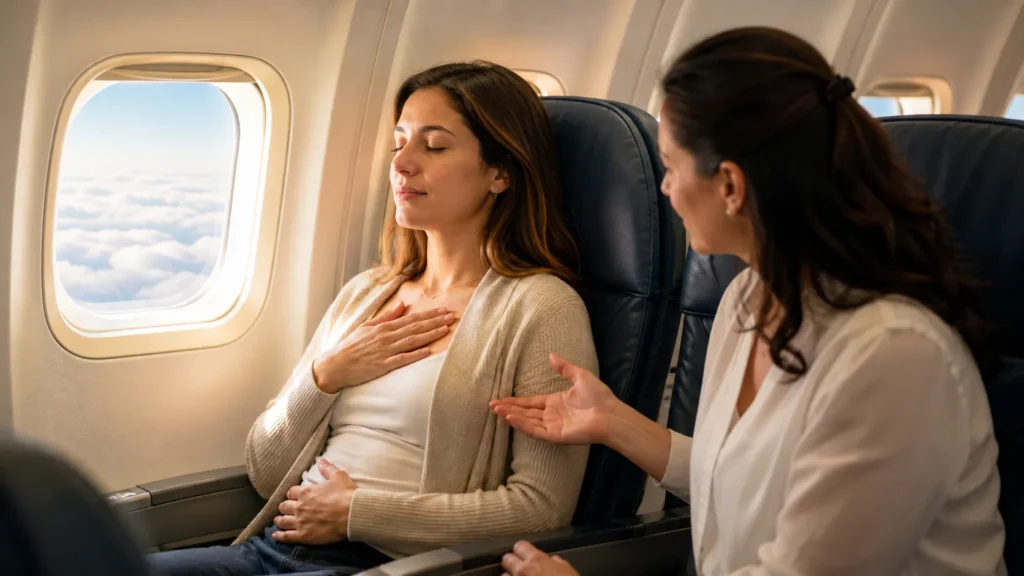
Turbulence can feel scary, especially as fall travel brings business trips, family visits, and early holiday planning. Even when you know planes are built to handle normal changes in the air, a sudden drop, a sharp bump, or the sound of the seatbelt sign can make your body feel alarmed.
At Flying Phobia Therapy NYC, we understand that there is a difference between feeling uneasy during a bumpy flight and having fear that changes your life. When worries about turbulence affect sleep, work obligations, family plans, or your willingness to book a ticket, therapy for fear of turbulence may be worth considering. We want to help you understand why this fear can feel so powerful, how to spot flight panic, and what kind of support may fit your symptoms.
Turbulence Is Uncomfortable, Not a Sign of Danger
Turbulence is irregular air movement that can make an airplane feel bumpy, shaky, or suddenly unsteady. It can be unpleasant because it is hard to predict from your seat. Still, pilots, aircraft systems, and flight crews are trained to prepare for and manage changing flight conditions.
Knowing that fact does not always calm the nervous system. During turbulence, you may feel trapped in a place you cannot leave. Unfamiliar sounds, movement in the cabin, changes in your stomach, and the lack of control can all send a danger signal through your body.
We often see people who understand aviation safety but still experience intense symptoms, such as:
- Racing thoughts about what could go wrong
- Tight muscles, sweating, or nausea
- Catastrophic images of a crash or emergency
- A strong urge to escape, even while seated safely
Fear is not a weakness, and it is not something you should shame yourself for. Your mind may understand one thing while your body reacts as if an immediate threat is present. That gap is one reason reassurance alone may not ease severe flying fear.
Fall Travel Can Intensify Anticipatory Fear
Seasonal weather changes can make turbulence worries louder. Rain, wind, storm forecasts, and airline delay notices may lead you to check weather apps repeatedly or search online for signs that a flight will be rough. For many people, the days leading up to travel are harder than the flight itself.
Fall and holiday plans can also add pressure. You may feel that canceling is not an option because of an important meeting, a family gathering, or a long-planned vacation. Worry about disappointing others can pile onto the fear of turbulence, making the whole trip feel much bigger than it is.
A few practical choices may make travel day feel more manageable:
- Choose a seat where you feel more comfortable
- Arrive early enough to avoid the stress of rushing
- Limit repeated searches about weather and turbulence
- Tell a trusted travel companion when anxiety is high
Preparation can support comfort, but it does not always address aviophobia or severe flight panic. If planning becomes obsessive or the thought of flying takes over your daily life, it may be time to look beyond travel-day coping tools.
Know When Fear Has Become Flight Panic
Turbulence fear deserves more attention when it begins to control your decisions. You might avoid flights despite important work or family obligations, lose sleep for days before a trip, or arrive at the airport and feel unable to board. Some people rely on alcohol or medication without professional guidance because they do not know how else to get through the experience.
Aviophobia and severe flight panic can involve more than concern about bumps in the air. The fear may center on being trapped, losing control, crashing, having a panic attack in public, or being unable to escape physical symptoms once the plane takes off.
Signs that fear may be moving beyond ordinary discomfort include:
- Canceling or postponing important trips
- Panic attacks before or during travel
- Intense dread that begins well before departure
- Avoiding conversations, booking sites, or airports
- Feeling unable to board after arriving at the gate
Therapy for fear of turbulence should match the intensity and impact of what you are experiencing. Mild, occasional anxiety may respond to basic coping resources. Repeated avoidance, strong panic, or a fear that interferes with your freedom to travel may call for a more specialized approach.
Therapy for Fear of Turbulence Should Fit Severity
Not every traveler needs the same kind of support. If you have mild to moderate flying anxiety and can still get on a plane, a CBT worksheet can be a useful self-guided resource. It can help you identify anxious predictions, notice unhelpful thought patterns, and practice calmer responses before travel.
We want to be clear about the role of that resource. A CBT worksheet is intended for mild to moderate flying anxiety. It is not part of the Total Reset Method, and we do not present it as the preferred treatment for aviophobia or as a complete solution for severe flight panic.
For people dealing with aviophobia, intense turbulence fear, or panic that disrupts travel, we use the Total Reset Method. This is a non-exposure approach designed to help clients address flying-related fear without reliving distressing memories or completing exposure exercises. An individual assessment can help determine whether this approach fits the level and pattern of fear you are facing.
Take a More Grounded Approach to Travel
Feeling uncomfortable during turbulence is common. Persistent dread, panic, sleeplessness, and avoidance are different, particularly when they keep you from work opportunities, family time, vacations, or meaningful events. You do not need to wait until a major trip feels impossible before giving the problem attention.
For mild to moderate anxiety, a CBT worksheet may offer a practical place to organize fearful thoughts and practice a steadier response. When aviophobia, severe turbulence fear, or flight panic is present, a specialized non-exposure approach may be more appropriate. Understanding the difference can help you choose support based on your actual symptoms, rather than trying to force one solution onto every kind of flying fear.
Build a Calmer Path Forward
At Flying Phobia Therapy, we help you identify the support that fits your experience and goals. Learn how therapy for fear of turbulence can provide a structured, individualized path toward greater confidence when flying. If fear is affecting your travel plans or peace of mind, contact us to discuss your next steps with our team.