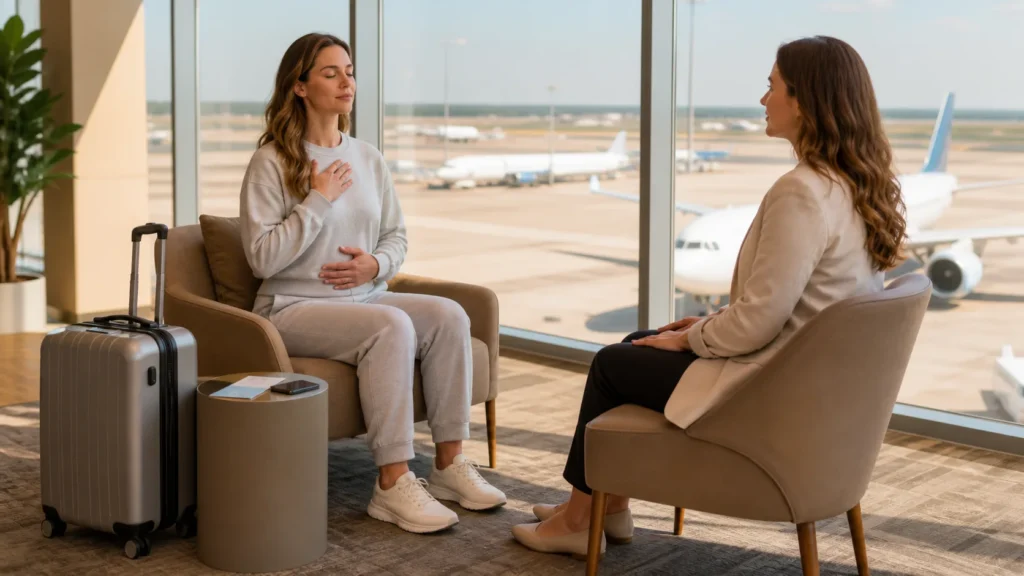
Reclaim Calm Before Holiday Travel
Flashbacks can make flying feel unsafe long before you reach the airport. As Thanksgiving, Christmas, and New Year’s travel draws closer, we often see how past frightening experiences can bring extra stress to plans that are supposed to feel joyful.
A booking confirmation, a crowded terminal, or the thought of being in the air can set off fear, even when you know flying is generally safe. Understanding what is happening in your mind and body can help you see why avoidance grows and why a focused path forward matters.
Why Flashbacks Can Make Flying Feel Dangerous
Flashbacks are unwanted reminders of a frightening experience that can feel very real in the moment. They may show up as a memory, a strong mental image, body sensations, emotions, or the feeling that you have been pulled back into something scary from the past. They do not always look like a clear visual replay.
For some people, flight-related triggers wake up the body’s alarm system before a trip even begins. The brain may connect a current situation with an old threat, even if the two situations are not truly the same.
Common triggers can include:
- Turbulence or sudden movement during a flight
- Engine sounds, takeoff, or landing
- Seatbelt signs and changes in cabin lighting
- Crowded boarding areas or confined spaces
- News reports about aviation incidents
When the alarm response turns on, logic can feel far away. You may understand that an airplane is safe while still experiencing a fast heartbeat, shaking, nausea, racing thoughts, sweating, or an urgent need to get away. We want you to know that this response is real. It is not a sign that you are weak, irrational, or failing to try hard enough.
How Flight Triggers Can Shrink Your World
Avoidance often begins as a way to get quick relief. Canceling a trip, choosing not to book, or asking someone else to travel without you may quiet the fear for the moment. Unfortunately, that relief can teach your fear response that avoiding flying was the only way to stay safe.
Over time, the list of situations to avoid can grow. What started as fear of being on an airplane may become fear of airports, travel planning, packing, or even hearing someone talk about an upcoming trip. We see how this can slowly make a person’s world feel smaller.
Flight fear may lead you to:
- Skip holiday gatherings with family and friends
- Turn down work opportunities that require travel
- Miss destination weddings, reunions, or special events
- Spend days driving to avoid a relatively short flight
- Dread a required trip for weeks or months beforehand
The emotional cost can be painful. You may feel embarrassed when others do not understand why you cannot “just get on the plane.” You might feel guilty when a partner, child, or coworker has to change plans because of your fear. Even more difficult, you may begin to believe that travel and freedom are simply not available to you. Fear can be convincing, but it does not have to make every decision for you.
Total Reset Support for Flight Panic
Aviophobia and severe flight panic deserve more than being told to push through. If fear causes panic before you book a trip, intense dread for weeks, panic attacks at the airport, or an inability to board, we believe the underlying fear response needs focused attention.
At Flying Phobia Therapy NYC, Dr. Bob uses the Total Reset Method, a focused non-exposure approach designed to resolve the fear response without requiring clients to relive distressing experiences. The method does not ask you to repeatedly place yourself in feared flight situations or force yourself through overwhelming distress.
This focused approach may be appropriate when flashbacks, panic, or severe flying fear is limiting your life. Rather than organizing every trip around escape plans, avoidance, or dread, we help you explore a treatment path that directly addresses the fear response connected to flying.
A self-guided tool can be useful in some situations, but it is important to match the tool to the level of fear you are experiencing. Severe symptoms are not a personal failure, and they should not be treated as something you simply need to manage alone.
Use a CBT Worksheet for Mild Flight Anxiety
For mild-to-moderate flying anxiety, a CBT worksheet can be a practical self-help resource before an upcoming trip. Writing down worries may help you notice anxious predictions, physical sensations, and the thoughts that make travel feel harder.
A simple worksheet can include prompts such as:
- What am I predicting will happen?
- What evidence supports or challenges this thought?
- What would I say to a friend with this concern?
- What physical sensations am I noticing right now?
- What practical support can I arrange for travel day?
The goal is not to argue with yourself or pretend you feel no anxiety. Instead, the worksheet can create a little space between a fearful thought and an automatic reaction. For someone with mild concerns, that pause may make it easier to prepare for travel in a calmer, more balanced way.
Still, we draw a clear line here. A CBT worksheet is not treatment for aviophobia, severe flight panic, or debilitating flashbacks. If your fear feels overwhelming, keeps you from boarding, or repeatedly limits the life you want to live, self-guided coping tools alone may not be enough. The Total Reset Method is the focused treatment path we recommend for those more intense, life-limiting symptoms.
Make Holiday Travel Feel Possible Again
Flashbacks and panic can make an airplane, airport, or travel plan feel dangerous, but fear does not have to decide where you go or who you get to see. Recognizing the difference between mild anxiety and severe flight panic is a meaningful first step toward choosing the right kind of support.
Before holiday travel begins, give yourself permission to take your fear seriously without letting avoidance run your life. A focused approach can help change the fear response so travel feels less like a threat and more like a choice again.
Build a Clearer Path Forward
At Flying Phobia Therapy, we help you understand how flashbacks may be affecting your relationship with flying and identify the support that fits your needs. Our team uses the Total Reset Method to address aviophobia and flight panic at their source. Contact us to discuss your concerns and take the next practical step.